
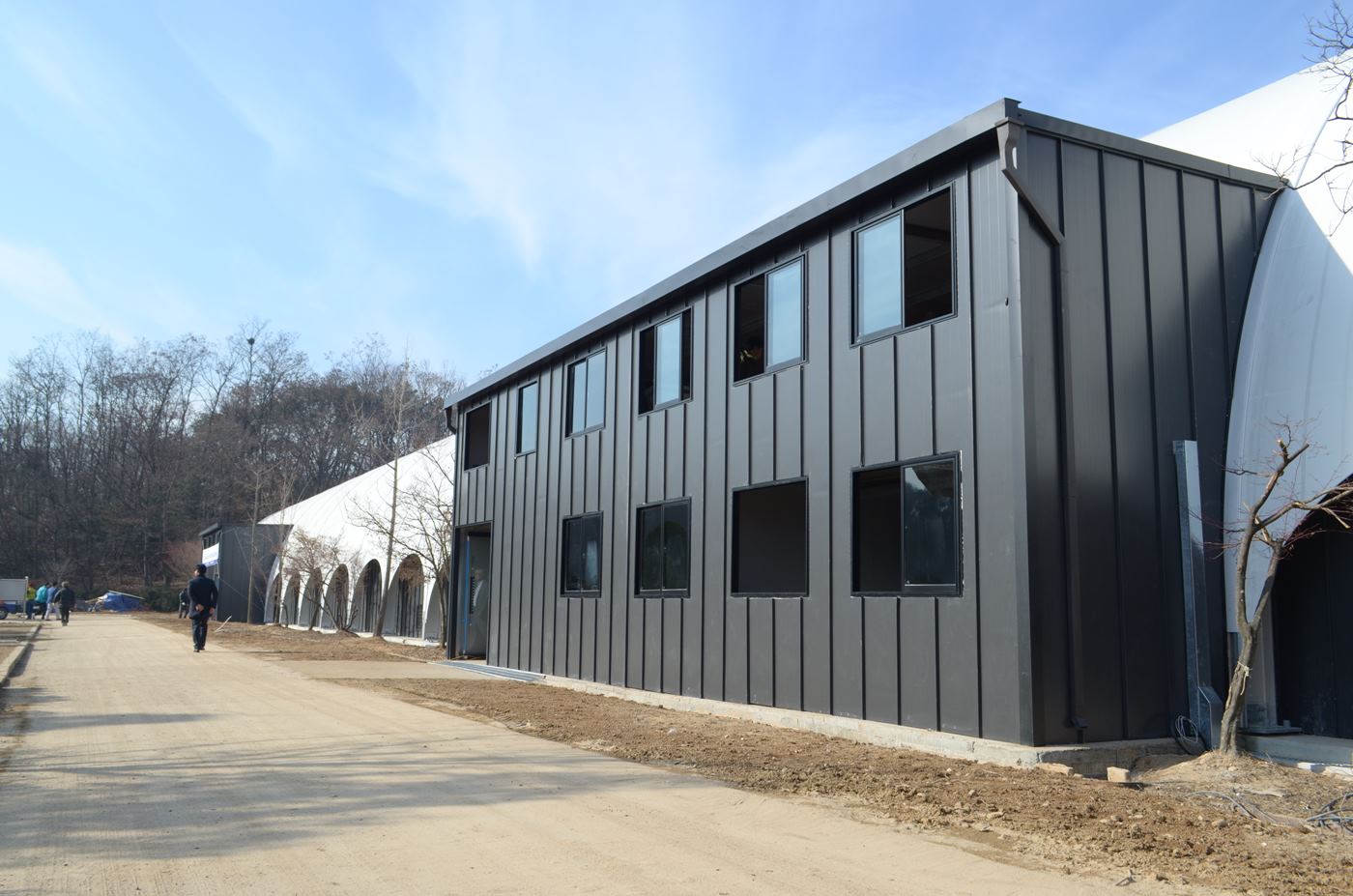
Education is a foundation of society, and the design of learning environments plays an important role in the experience of students and teachers. Traditional school buildings may not always respond flexibly to changing student numbers, new teaching methods and sustainability requirements.
What is modular school design?
Modular school design aims to create adaptable learning spaces rather than a fixed building arrangement. Classrooms, social spaces and support units can be expanded, reorganized or adapted to new functions as needs change.
Advantages for greener, more sustainable schools
Modular buildings can be designed around energy efficiency, insulation, efficient lighting and the integration of renewable energy systems. Recyclable materials can help preserve natural resources, while prefabrication can reduce time and waste on site.
Demountable and expandable systems allow a school to evolve over time. Conventional classrooms can be converted into open learning spaces, while laboratories and additional support areas can be introduced in a more controlled way.
Innovative learning environments
Modular schools can support different learning styles and provide flexible environments for collaboration and project-based work. In this way, educational infrastructure can respond not only to today’s capacity but also to future needs.
For greener and more sustainable education spaces, modular design offers a strong combination of rapid delivery, adaptability and resource efficiency.